Showing posts with label biochar. Show all posts

Monday, 6 April 2020

Biochar Woks, Cooking, Collapse

I came back to my home city about ten years ago, after having lived for a few years up north in the Yukon. I took a culinary arts course at the college in Whitehorse, and spent some time working in the college's kitchen and at a hotel restaurant in town.

Whitehorse, YT

Strange as it was to move to a remote and isolated city to learn more about the culinary trade, instead of heading to some metropolis with a thriving restaurant scene, I feel it worked out well. No waiting list for the course, and tuition and rent were very reasonable. The hotel I worked in was part of Holland America, a stop on their bus tour line that ran from California to their cruise ships in Alaska. The sheer number of customers passing through the hotel, and the chaos of trying to serve them decent meals was a great chance to put into practice the ideas I'd picked up at school and from reading through cookbooks and culinary magazines.

That was a dark, sleepy winter of working weekends at the hotel, while taking the cooking course during the week and studying in the evenings for the test every Friday. I remember one December morning, working in the college bakery for a few hours, and looking out the window around 10am to see the sun rise over the snowy woods. The short daylight hours of course also meant that that sunset would be around 3pm, before we would get out of class.

A winter morning in Whitehorse, YT
Not too long after the term ended, one day in early spring the tour buses started arriving, along with a few new cooks and servers mostly from Ontario, and all at once we were swamped every dinner service, completely unprepared.

It taught me a lot. After getting spanked every night for a few weeks, I started trying to break down every station I worked on (grill, pasta, entrees) into a functioning system: writing up new prep lists for all the stations on the line with every single ingredient that was required of us. I decided on the minimal set of equipment for my stations to keep them clean, uncluttered & efficient, and a working method for every item, to make sure the dishes were ready to serve and not overcooked when the chef called for that table's food to be plated. I used what I knew of mnemonic systems to create some sort of physical marker for every dish the chef called out. Not all the stations had printed bills to look at, forgotten orders were a constant problem.
Arctic Char

We were required to come up with daily specials on the pasta and entree stations, and I used that opportunity to try out a lot of recipes and ideas. The chef there ordered a lot of fresh herbs & mushrooms, and fish like halibut and arctic char for us to work with. I've noticed in every establishment that I've cooked in, the chance for cooks to constantly create specials and new dishes is what keeps the heart of the kitchen alive, without that it becomes an assembly line with little space for human abilities to take root and grow.

*  *  *  *  *

When I got back to Winnipeg, I struggled to find a kitchen that was like those I worked in up north. I was really disappointed with two of my first positions, working in the Manitoba Legislature and in a college residence dining hall, both of which had great kitchen spaces housed in beautiful, historic stone buildings, but at which the food quality was severely constrained. One of he first kitchens I came across that had a spark of independence and creativity was a restaurant owned by the student union on campus. It was re-opening at the time, after a renovation and expansion of the kitchen, and one of the new pieces of equipment was a commercial wok station, which I'd never worked on before.


The restaurant was managed by a tall, enthusiastic German man, who was passionate about cooking and hospitality and was a delight to work with. He had recruited a traveling German friend of his to help with the relaunch of the campus restaurant. His friend was a chef, also quite tall, with a thick beard, who had extensive cooking experience in Europe. He had spent time in Thailand, learning about their cuisine, and was knowledgeable of wok cooking in general. He had a lot of intense interests, from running marathons to working as a boat builder, so I picked his brain as often as I could, on culinary matters and many other things, he spent an inordinate amount of time volunteering his time in the restaurant.

*  *  *  *  *

At that point, a few years after the financial crisis of 2008, I'd already steeped my brain in thoughts of peak oil and economic collapse for some time. I was actually surprised to have made it back to my home city at all before things all fell apart, as I imagined they might.

I had tried to think of ways that a culinary education might be to use in a collapse scenario: maybe I could study how many calories are needed for hard working people, and how these needs could be met with locally available foods? Maybe cooked en masse, in some sort of energy-efficient way? My ideas of what industrial collapse would look like were very rudimentary. I envisioned something like a quick-onset, severe economic depression, where communities would have to scrape together their resources in some sort of communal response to hard times. (Since then, the model of a long, slow decline, punctuated by periodic crises, seems like a better model for understanding recent decades.)

Wheat, meat, cabbage & ale
One thought I had: as cooks we tended to focus on the culinary styles of warmer regions, places like, say, Italy or Thailand, with ingredients like olives, lemons, coconut milk, tamarind, etc. Maybe, where I lived, in the prairies, we might be better to model our culinary styles on regions with a climate more similar to ours, based maybe with a lot of fermented cabbage and root vegetables and cereal grains?

I bought a few books on German food traditions. I asked that chef if maybe Germany might be a comparable climate to match the conditions in Manitoba, and he laughed and said Siberia was a far better match. (Alright, Russian cuisine it is.)

* * * * *

www.graceyoung.com/
To get a handle on wok technique and to get some ideas for wok specials, I got a copy of Grace Young's excellent The Breath of a Wok. 

Young grew up in San Fransisco, her parents had recently emigrated from Hong Kong. She relates the deep impression left on her from her father's respect and enthusiasm for the Cantonese style stir-fry dishes. The book records her research into the history of woks and Chinese cooking, how they are made and how they are used, in Hong Kong and throughout China.

The title phrase, the breath of the wok, is a translation of the Cantonese phrase wok hay, which is used to describe a well-cooked wok dish: the elusive combination of the high-heat searing and the touch of smokiness this imparts, the fresh vegetables and meats, cut to the right size and added to the mix at the right time to give them just the right texture. The dish has to be served promptly, before the ephemeral wok hay begins to dissipate.

Young explains that hay is the Cantonese pronunciation of the character that is pronounced chi or qi in Mandarin, more well known to westerners, meaning both "breath" and "spirit", connoting the subtle energy that animates us. It's interesting that most ancient languages had a word that linked breathing to the idea of an subtle life energy: prana in Sanskrit, pneuma in Greek, ruach in Hebrew, spiritus in Latin. Chinese culture has long incorporated this concept of qi into daily life, with movement arts like qigong, with how one builds and arranges their living space, in how food is prepared. Young relates how her family would discuss the wok hay of a dish while eating out in San Francisco restaurants for special occasions.

https://modernistcuisine.com/
The deep, curved shape of a wok pan makes it versatile, ideal not only for tossing foods together, but combining many of the virtues of frying pans, skillets and deeper flat-bottomed pots. Along with stir-frying, they can be used for "pan-frying, deep frying, poaching, braising, boiling," and, when you add stacking bamboo baskets, they can be used for steaming and smoking. "It was staggering to realize that nearly the entire repertoire of Chinese cuisine can be cooked in a wok."

I'm reminded of how professional cooks in the west have traditionally employed an array of knives, from chef's knifes of several sizes, to a boning knife, a paring knife, a slicer, among others, while Chinese chefs (from what I've read) have tended to use a single cleaver for all their knife work. I like working with a full knife roll, but from an ecotechnic standpoint, I appreciate the economy with which the wok and the cleaver can accomplish so many varied cooking tasks.

What first struck my collapse-addled brain though was Young's descriptions of the pai dai dong, the Hong Kong version of open air food stalls, which were common when she'd visited the country as a child, but were disappearing when she returned as an adult to research her book.

The cooks could have such simple set ups: a folding table and some chairs, a heat source, a few ingredients, and they were open for business. It struck me then that, in some form of social collapse, something like this could be a way to make some daily cash. I've read a little about the collapse of the Soviet Union, and that book mentioned elderly women selling various foodstuffs in the street. The cash was only so important, it's value was tenuous in a collapse, but it was an impromptu way of distributing food and maintaining social relations in a struggling urban centre.

In a dai pai dong the food didn't have to be all that complicated. Young mentions that one of her favorite stalls was a chestnut hawker's, who cooked chestnuts in a wok filled with hot sand mixed with a little sugar. Each stall offered different types of dishes, all manner of stir-fries, noodles, pancakes, tamales, omelettes, fritters, and soups.

Young writes, in the early aught's, that food service regulations were making most dai pai dong illegal, though in some areas they would still "appear and disappear depending on the watchfulness of the local officials... these nightly street gatherings have an energy and a warmth made all the more attractive to me because of their chimera-like quality, appearing and disappearing right before my eyes."

The food market vendors weren't the only facet of traditional wok culture that was fading away. Young says that one used to be able to hear from the streets the hammering of carbon steel discs from small artisan shops who produced woks locally, before fire and noise regulations closed most of these shops down. Production had moved to factories in mainland China, where labour costs were lower. And the wok repairmen, who used to make house calls to patch damaged woks, had likewise been put out of work: "No one repairs a wok when a new one is so cheap."

When she left Hong Kong to tour through some rural areas of China, Young found more of the traditional wok culture she was looking to document. A village she toured had a large, communal wok stove, in the old manor house of the landlord who was overthrown during the Cultural Revolution. It had two giant woks, about 42" in diameter and 15" deep at the centre, set into round masonry ovens. Too big for one person to lift alone, on the day Young visited, women from the village were boiling soybeans in the large woks to make tofu. They also use them for fermenting sweet potatoes or rice to make wine. Her guide mentions that large woks like these can be used to feed animals, or to heat water for washing clothes or bathing.

From "The Breath of a Wok"


The other stove that interested me was the traditional hearth stove at the home of the rice farmer who guided young around these areas of rural China, a type that had been used for many centuries, since the Han dynasty. Made of brick, about 2.5 feet high, with a stoke hole at the base of a fire chamber, dry rice stalks could be fed in at different rates, as the cooking process demanded different levels of heat. It's efficient use of fuel had been "dictated by centuries of shortages and need... the entire workplace is a marvel of efficiency."

It the colder regions of northern China, it seems that woks tended to be set into masonry ovens, and used more for long-cooking braises and stews than the quick intense stir-fries popular in the south.

Apparently in the north there is not a colloquial phrase equivalent to the Cantonese wok hey. It's another interesting example of how food traditions rise out of local traditions: in the heat of Hong Kong, a quick, intense stir-fry, using a minimal amount of fuel is optimal, while in the north, where a fire in a masonry hearth stove keeps a home heated, it makes sense to use that steady heat supply to simmer meats and vegetables. In tropical climates, foods can spoil quickly, so cooking smaller batches from fresh ingredients often makes sense. In colder regions, where nature supplies unlimited cold air for much of the year, the remainders of a stew can be cooled and saved for tomorrow's meal.

Cen Lian Gen, The Breath of a Wok
When Young traveled to Shanghai, she came across the traditional wok craftspeople she had hoped to find, two brothers running a small shop that their father had founded seventy years earlier. They took a minimum of five hours to hand-hammer carbon-steel into what they call "fire iron woks." Young notes that it was hard, deafening work in a fairly rudimentary shop, but that their pans "are beautiful, with rich, dull, pebbled finishes and exquisite crafting. They are nothing like I have ever seen before."

The demand for handmade woks had been decreasing over time, especially as western foods and modern cookware became more popular in China. The shop, operated by the brothers Cen Lian Gen and Cen Rong Gen, still had steady business with Shanghai's top restaurants, who appreciated the strength and durability of the individually made woks. After Young's book was released, Williams-Sonoma began to sell their woks in the U.S.

The shop closed in 2016, as the neighborhood was slated for demolition, making way for new construction. When asked if he worried about the future of his craft, Cen Lian Gen replied that "people are too busy and they have less time to cook. But I don't worry about the fate of the wok. A good restaurant will always use a traditional carbon-steel fire-iron wok."

Two of Grace Young's woks, 16 yrs. old and brand new


*  *  *  *  *


From "The Breath of a Wok"
One image from Young's book stuck in my mind, a photo of a wok sitting on a pail of charcoal, cooking what looked like a simple mix of cabbage and bell peppers.

I think when a person first starts taking seriously ideas of social and economic collapse, part of the process is imagining what you might do if things fell apart really quickly. Some people hold to these rapid collapse scenarios, others modify their vision to encompass a drawn-out, protracted decline, and still others, after a few years of preoccupation, tire of the subject and move on.

One of my earlier fast collapse imaginations was sparked by this picture of cooking over bucket of coals: I envisioned attaching a small trailer to the industrial-grade bicycle I'd bought from Worksman Cycles, USA, and riding it through the quiet morning streets, to pick up some fresh vegetables and meats to add to the cooking gear I would be hauling to set-up on some busy street corner. I suppose I'd have had to pick up charcoal from somewhere occasionally, I guess from some small scale charcoal maker, traditionally called a 'collier'. Charcoal-makers would heat pieces of wood in a low-oxygen setting, driving off volatile substances to leave behind the chunks of black carbon that people could ignite again in their stoves, to cook over the even, fairly smokeless heat.

How I imagined there would be daily farmer's markets and enough street traffic of workers passing by to be customers, I'm not sure: one's brain only has so much computing power to envision how a quick collapse scenario would affect an entire society. The idea of a charcoal street wok was just one among several others. I pictured using wet stones to sharpen knives, scissors and other larger blades, and getting a grain mill so that I could store grains and bake whole wheat bread.

Biochar made from sawdust pellets
Time passed, and no total materialized. Eventually I transitioned out of working as a cook and got into plumbing. An interest in climate change, however, returned my thoughts to charcoal, as I read about the subject of biochar. In a nutshell, biochar is made by heating organic materials, such as tree branches or corn stalks, in a set up that greatly limits the amount of oxygen that reaches the materials as they bake.

This leaves behind char that is largely carbon, in a form that won't break down and return the atmosphere for hundreds to thousands of years. It can be mixed into compost and returned to the soil, or mixed into materials like mortar or plaster and sequestered into the built environment. This allows the next generation of trees and plants to draw down more carbon from the atmosphere over the following season.

I tinkered with some small biochar retorts, using paint cans and coffee carafes, to get a feel for how biochar was made while I read about the subject. Looking at videos about the common larger kiln design, made from 55-gallon barrels that small scale farmers tended to use to produce biochar for their themselves, they almost always commented that ideally they'd like make use of the heat produced when making the biochar, for something like cooking.

Clay Biochar Model Kiln
The only examples I'd seen attempting this this were some pictures of clay biochar cook stoves being made in Africa, and I couldn't find any instructions for these. I tried to design my own clay version in a pottery class I was taking, with ring pan fitting around the chimney. It didn't work that well, the heat rose too quickly through the chimney.

I still had in mind that idea of a wok set over a barrel of burning charcoal. I thought that a wok burner that used the heat from the process of making biochar would be interesting. Instead of wasting the heat used to make charcoal, and then using the charcoal to cook food, emitting carbon dioxide in the process, this cook stove would use the heat from the char making process. The char would then be used to sequester the carbon, adding it into compost and then back into the soil, hopefully improving soil fertility in the process. Every time you cooked on it you'd engage in a cycle of drawing down carbon from the atmosphere.

Stacking up the component pieces
I found some 15 gallon drums that seemed about the right size to have a wok sit above them at about torso-height, and the project came together fairly easily from there. (I'll include some pictures showing how it was assembled as a post-script to this.)

Basically, there's an outer drum with holes drilled around the base, and then a smaller metal container inside to hold the dry organic feedstock and keep it mostly out of the air-stream in the drum. Into the lid of the drums I inserted regular galvanized steel ductwork fittings to serve as the chimney, increasing the diameter size from 6" to 8" at the top, for the wok pan to sit inside.

These stoves work on a basic TLUD design (Top Lit Up Draft): the flames are at the top of the container, and hot, narrow chimney creates a natural upwards draft that keeps the airflow rising around edges of the inner chamber of the feedstock. This keeps oxygen from readily combining with the carbon in the organic materials. The nice thing about TLUDs is that you don't need a separate fire to pyrolize the dried materials: the flames in these sit just above the feedstock, and radiate heat downwards into the materials to keep the volatile gases coming. The rising current of air from the holes at the base ignites with the volatile gases, and whisks the exhaust up and out the chimney.

I used a Y-fitting on chimney of the first stove I made, as I thought I might need to maintain the upwards draft, I thought perhaps the wok pan would prevent proper air flow. I found this lost too much heat out the Y, it didn't produce the blistering fire needed for proper wok cooking. Grace Young explains:
When a wok is not scorching hot, food cannot be seared and a stir-fry becomes watery... with good wok hay, vegetables have a crisp texture the Cantonese call song, highly valued in Chinese cooking... (p. 63)
On the next stove I made, I omitted the Y-fitting and drilled holes in the 8" fitting that the wok sits in, and this worked wonderfully, the wok fire was extremely hot and close to the base of the pan. The two stoves work well as a team though: the hotter red one is great for a proper stir fry, and the cooler black one is a good temperature for cooking a wok-full of rice, slowly braising meat or simmering a thai coconut curry sauce. It's about as easy to light and tend to two stoves as it is one, and you've sequestered double the carbon by the end of the session.

The easiest fuel source for me has been sawdust pellets, a waste product of lumber production. Being just compressed sawdust, there are no adhesives or chemical binders to worry about ending up in garden soil. I've used 2x4 cut-offs and even added in pistachio shells, to see how they would char. I would like to start collecting up twigs and branches to make into biochar. My idea is to dry batches of them in the solar dehydrator I made last summer, removing these screened trays and just stacking them inside to dry in the current of warm air.


These stoves are, to some extent, a novelty. I am not positing them as any sort of solution for climate change, of course. I made them to get a better feel for the process of pyrolysis and to help promote the idea of biochar, though kilns of these size could easily produce enough char for a backyard garden, if it turns out that mixing biochar into compost is a worthwhile soil amendment.

https://www.chelseagreen.com/product/burn-paperback/
Biochar can be made at different scales however: I envision it being produced in suburban backyards, on small-scale market farms, on municipal lots near the where cities compost the branches and trees they cut down, and then again in large industrial plants on a regional level. I think of biochar as being a subset of "carbon farming", one of the various ways we can increase the amount of carbon that is stored in the earth, to accompany other practices like reforestation and afforestation. Project Drawdown lists biochar as #72 in their list of the top one hundred methods of reducing the amount of greenhouse gases in the atmosphere. Albert Bates and Kathy Draper have recently released a fascinating book that details the wide range of projects people are innovating to make and use biochar, that I'm looking to review in an upcoming post.


*  *  *  *  *

I wrote most of this essay before the coronavirus outbreak had become a pandemic. It's surprising how much the current context alters how I'm reading the pieces I was working on even a few months ago. On social media and in podcasts, I'm hearing discussions of decline and collapse from people who I wouldn't have expected to consider the idea. I don't think anyone really knows how all this is all going to play out, but the speculations run from moderate to quite dire.

https://newsociety.com/books/g/green-wizardry
I'm not a "prepper" at all, at least not by any normal understanding of the word. Despite all the reading and ruminations that have occupied me on these topics, I haven't managed to position myself for periods of crisis much better than the average city dweller: I've got no homestead, no garden, no substantial pantry. However, in reading about topics related to sustainability and resilience, I'm trying to build up skills that might possibly be put into use at some point down the line. Working on small projects like the biochar woks keeps me engaged in these issues. I think it is a way to process information and emotions about the predicaments that face us, and better imagine how we might adapt and respond.

I've noticed my own imaginings of the future becoming less dire over the years though. I'm still expecting to see industrial decline, various resource shortages, increasing climate disruptions, but I'm picturing it as a long process that we will ultimately adapt to, and hopefully mitigate, if we are wise. My focus is on learning about helpful skills and practices, and working to bring them forward into the future.

For these wok stoves, I've imagined setting them up at a local farmer's market and cooking stir-fries, beside a booth with information on biochar and appropriate technology. Maybe we could use some fresh vegetables and meats from the market, and farmers could take the biochar with them at the end of the day, and we could raise some money for a local group working to help the community through all of this.


*  *  *  *  *

Construction Steps


I had in mind a general design like this, and then started modifying the parts so that they'd work as a wok burner.


I found some metal drums that seemed abut the right height, about 30" tall.

The first step was to drill some holes all around the base of the drum. These allow air into outer chamber of the retort, to rise up and combust in the flammable gases above the organic materials, and then drawn up and out of the hot chimney.


Next, I added some three long bolts facing into the centre of the barrel, which would serve as an inner shelf for the container of woody feedstock to rest on.


To hold the feedstock for the biochar, I found these containers in a local garden centre. I drilled a bunch of small holes, evenly spaced, through the bottom of the pail.

These allow a small amount of "process air" to enter the inner chamber, while the majority of the air in the drum rises along the outside of this pail, warming before it ignites above the feedstock.

The small flow of process air allows the natural upward draft to quickly draw up the flammable volatile gases from the woody materials as they heat.


I took another one of these containers, turned drilled holes around it's base, and used tin snips to cut a round hole in the bottom of the container, for the chimney to fit into. This second container gets flipped over and used as a lid for the inner chamber, filled with biochar feedstock.


This one is filled with sawdust pellets, though I have used lumber cut-offs and even pistachio shells since then.


Next, I drilled a circle of holes in the drum lid for the chimney to fit into.


I cut through these holes with reciprocating saw, and bent down the metal. This actually worked well to hold the chimney in place.


The 6" ductwork coupling fits inside the hole in the lid, and then the 6"x8" reducing coupling was fit over that.

Holes are drilled around the top to let the exhaust out and maintain the natural draft once the wok is placed on top.

I added six eye bolts and some thin aircraft cable in a tripod arrangement to give the wok more stability during use.


Unnecessary step: filling the gap between the chimney and lid.

I first tried some high heat gasket maker - which caught on fire once the kiln reached full temps!

Next tried "waterglass," which you can make by heating a solution of lye and silica in water. That creates a clear, sticky adhesive, which I mixed with masonry sand and molded around the base of the chimney.

The high heat set the waterglass and sand and sealed up the gap.


Last I sprayed the lids and chimneys with Tremclad High Heat Enamel paint to prevent them from rusting.

I found this 14" Lodge Cast Iron Wok on clearance when Hudson's Bay Home was clearing out it's inventory. Not necessary at all, but it's sturdy and does a good job at diffusing the heat.

Grace Young notes that in China, besides the carbon steel woks shown in the photos above, cast iron woks are also traditional, but they are not like Western cast iron pans. They are thin, and smooth, apparently you can shatter them if you were to smash them against a hard surface.


Besides sawdust pellets, which pyrolise nicely and evenly, I've tried making biochar from 2x4 cut-offs, which also worked well, but was a little more difficult to get started.


As an experiment, I tried charring pistachio shells, just because they were already dried and easy to collect up.

I kept the in a separate can for the trial just have a sample of charred shells separate from the wood, but normally I'd just mix them in with the the sawdust pellets.

They wouldn't support the initial combustion to get the pyrolysis process going, but mixed among other combustibles, you can collect up the carbon in all sorts of dried organic materials.


Sunday, 26 May 2019

The Origins of the Biochar Idea


"There is one way we could save ourselves and that is through the massive burial of charcoal. It would mean farmers turning all their agricultural waste – which contains carbon that the plants have spent the summer sequestering – into non-biodegradable charcoal, and burying it in the soil. Then you can start shifting really hefty quantities of carbon out of the system and pull the CO2 down quite fast."


I only happened to come across the subject of biochar through following the work of Albert Bates, an American permaculture teacher, among other things. He was a prominent figure in the 'peak oil' movement that gained some traction in the public consciousness around a decade ago, which I followed intently at the time.

(I think that the peak oil mindset remains my basic orientation to our economic situation, even though a lot of the predictions from that movement ended up to be quite inaccurate, and almost all of the main peak oil writers have moved on to other things.

(When I consider my adherence to this dissolved movement, I think of a line from Bob Dylan's Ain't Talkin':

I practice a faith that's been long abandoned...)

Albert Bates had a long history in environmentalism before peak oil. He was law graduate who came of age in the late 1960s, abandoning his fledgling career to become a resident of a hippie commune/pioneering eco-village in Tennessee. He resumed his law practice to defend the water supply of that eco-village against encroachments from the nuclear power industry, and it was the research for that defense that led him to become a very early author on the issue of climate change, publishing Climate in Crisis in 1990.

After the peak oil moment pretty much dispersed several years ago (John Michael Greer wrote a moratorium for the movement in 2016), Bates continued on in his engagement with the issue of climate change and the promotion of eco-villages. One of his main areas of focus was biochar, publishing The Biochar Solution in 2010 and, with co-writer Kathleen Draper, another pioneer in the biochar field, releasing Burn: Using Fire to Cool the Earth earlier this year.

A "Toucan" Stove on  my Balcony
A few years ago, I was looking for some small projects related to sustainability and resilience to undertake, so that I could immerse myself more fully in these topics. I heard some podcasts in which Albert Bates discussed biochar, and I wondered if this was something that I could attempt making on my own? Maybe I could also try mixing the powdered char into compost, and then that compost into soil, to test the benefits it might provide in a garden bed?

I am confused as to why biochar isn't more well known among people concerned with climate change. True, there are many doubts surrounding the idea, and arguments from against employing biochar production as a wide-scale strategy to draw down carbon from the atmosphere. There are also responses to these criticisms, so long as the biochar is produced responsibly. (And Bates argues that there really aren't incentives to produce biochar irresponsibly, outside perhaps of certain possible governmental subsidy arrangements.)

Paul Hawken's "Project Drawdown" published a book comprised of a list of methods to prevent runaway global warming, compiled by a multi-disciplinary team of seventy researchers and scientists. They listed biochar as #72 out of one hundred technologies and techniques that could be used to avert catastrophic climate change.

It is a complex issue. Biochar is a subject that cuts across climate science, ecology, agriculture, industry and economics, so there are a lot of unknowns, and a lot of testing and research to be done.

https://www.drawdown.org/

Still, I think that biochar holds so much promise because it is ultimately so simple and so fundamental. I think at its root, the practical process of making biochar is almost also a symbolic action, and a representation of the carbon drawdown effort as a whole.

A "kon tiki" biochar kiln.
Biochar is almost entirely carbon, as black as coal or petroleum, being the charred the remnants of wood or other organic wastes. The carbon that composes it was once carbon dioxide, drawn from the air by the leaves of plants and trees.

The plants embed some of this carbon in their own physical structures, as well as giving off a portion of the carbon as exudates into the soil from their roots, feeding the soil microbiome.

When these plants die or are harvested, that carbon can be transformed, by a pyrolytic fire, in to a dark powder, resistant to decay. It's stirred into compost, and returned into the soil, sequestering that carbon in the ground for ages.

Or, that carbon powder can be mixed into lime mortar, and used to construct a stone or a brick wall that can last for hundreds of years, while new generations of plants draw out more of the excess carbon in the air, once released by the combustion of coal and oil. What was collected and released by mining and pumping and combustion can be collected again, and returned to the land and the buildings we live in, just by tending to our wastes and making use of them.

An biochar pit dug into the ground.
I'd like to use this series of posts to organize my thoughts on the subject of biochar, which has developed rapidly in the few years since I came across it. When I first looked into it, all I could find online was Albert Bates' book, another book called The Biochar Debate, and one expensive textbook on the subject.

Recently, I've checked again, and there's now a wide range of popular books, as well as t-shirts and aprons with biochar slogans on them, containers to make biochar in your fireplace, and bags of fertilizers with biochar mixed in them, all available online. Albert Bates has been busy researching efforts to include biochar in concrete, asphalt, paper, plaster, paint, mixing it with waste styrofoam to make sturdy roof tiles, mixing it into cattle feed, testing its ability to absorb EMF. Large biochar plants have been erected in China. It's a lot of detail to keep a handle on!

At the same time, I think there's no necessity to look into all that, if a person simply wants to incorporate biochar into their garden or farm. I think that's why I gravitate to the idea of biochar.

I've had the thought that maybe it's best for the economy and the environment when the things that we do can be done on every level of complexity (like a fractal pattern) rather than just at the highest levels of the industry.

A basic fractal pattern from Wikipedia.

For an example, take food: I think its best when people are gardening vegetables and herbs in their yards, or in community gardens, while market gardens produce more intensively at the local level, and large-scale farms producing things like grain crops at the regional level, or for international export. Or for clothing: a fair number of people can sew and repair clothes at home, with more complicated garments being made by local craftspeople, as well as some mass produced fabric and clothes items being made on a larger scale.

It strikes a balance between efficiency and resilience, and a society can allocate its resources at a higher or lower on that scale, depending on the economic situation of the time (as long as no level of production, from the local craftsperson to the businesses that trade internationally, has been allowed to wither away.) I think it also helps to maintain a healthy democracy: if the average person has a feel for the kinds of processes that are occurring on every level of society, I have to think that the decisions made by that society will tend to be better overall.

Along these lines, biochar seems to me to be a carbon sequestration method that could be implemented at all scales (similar to other carbon draw down measures like tree planting or building healthy soils) as opposed to high-tech carbon capture and storage plants (though I'm not against those in principle, being build in addition to these simpler methods.)

So, a small biochar cooker could be making biochar while providing fire light for a patio on a Friday evening.

A farmer could make biochar from brushwood in a 55-gallon barrel, or an open, cone-shaped kon-tiki kiln.

A municipality could have a biochar plant at the landfill, to char organic wastes, to add to composting food wastes and sewage sludge (if they weren't charring those as well.)

Large scale plants can make biochar from things like rice husks, corn stalks, or forestry residues, to produce energy streams (electricity, hot water, etc.) and biochar that can be applied as fertilizer en masse. (Interesting too that biochar itself is composed of something like a fractal design, with, as Bates says, "pores on the walls of the pores on the walls...")

For this initial post, I'd like to start with the history from which the idea of biochar was drawn: the 'terra preta' (dark earth) soils of the Amazon river basin. At various sites along the Amazon river, archeologists and soil scientists have worked to decode the ingredients left behind in these soils, and from what they have discovered, maybe some remnants of long lost wisdom cand be drawn and applied to the problems of our own times.


*  *  *  *  *

We don't need plantations or crops planted for biochar, what we need is a charcoal maker on every farm so the farmer can turn his waste into carbon.


If history is confined to the parts of the past for which we have written records, then the history of the civilizations that once lived in the rain-forests along the Amazon river can be known to us only from the thinnest shreds of documentation.

These documents are not from the peoples of these forest-dwelling cultures themselves, but from the sparse accounts of the Spanish, conquistadors and missionary priests of the 15th century, who were involved in the exploration and colonization of the Americas.

These brief encounters between these few Europeans and the peoples who lived along the Amazon brought to them the infectious pandemics that decimated the indigenous populations. The few who manage escaped these illnesses were forced to abandon their traditional practices, and formed small bands of hunter-gatherers to survive the collapse of their civilization. When Europeans next returned to these areas along the Amazon, almost a hundred years later, the civilizations there had been so completely dispersed, their housing subsumed by the rainforest, that the original European accounts of these populations were dismissed as lies and fabrications.

We rely on archeologists to study the physical record left by these civilizations, and apparently their findings have largely verified the accounts of the Spanish who first came across the peoples of the Amazon river basin. What they have pieced together gives us glimpses into a unique and fascinating civilization, whose methods of building and growing food seem possible quite different than many others of the ancient world.

I have to admit that don't know much about the findings of these archeologists outside what has been included in various books written specifically on the topic of biochar. I think that could slant one's perspective and, in particular over-emphasize the role of charcoal in the full range of practices these civilizations developed.

Most of the books I've looked at do freely admit that they are speculating about how the peoples of the Amazon basin might have used charcoal in their daily life, and in their soil building practices. Nonetheless, for someone who is interested in appropriate technology and resilient ways of living, even these speculations are full of ideas that might be useful for our own times.

As I understand it, the only account of European contact with the peoples of the Amazon river basin is the diary of a Spanish missionary, Father Gaspar de Carvajal, who accompanied an expeditionary crew of 57 men lead by the conquistador Francisco de Orellana.

Orellana had been involved with the colonization of the Peru since his youth, and learned several indigenous languages. Historians think he was possibly a cousin of Pizarro. He was charged with an expedition down the Amazon river, in search of gold, cinnamon, and nutmeg. The journey was inspired by stories of the "El Dorado" legend circulating among the Spanish, related to the chieftain of the Chibcha people, who was said to have been rolled in gold leaf and then ritually bathed in a sacred lake.

The journey down the river, the severe trials they faced (at one point they apparently boiled shoe leather and grass to avoid dying of starvation, at another they set up an impromtu iron foundry to make nails for repairing their ship), the raids they made on various settlements, the skirmishes they had with the indigenous peoples there, who sometimes followed them along the river for days: it seems like a complicated and involved story, hard to fully grasp from the accounts included in books on biochar.

Still from Apocalypse Now, director of photography Vittorio Storaro


Reading these excerpts from the story of their journey, of a ship sailing slowly down a river in a foreign land, told entirely from the European perspective, I can't help but be reminded of scenes from Apocalypse Now (which should probably remind me of one of its main sources, Joseph Conrad's novel Heart of Darkness, if I had ever read it.) Seeing that both the film and novel both focus on Western individuals entangled in an imperialist project, Vietnam and the Congo respectively, connections could probably be made with Father Carvajal experiences in Orellana's expedition. (I'm learning now that there is a popular book on Orellana's expedition titled River of Darkness, so I'm guessing I'm not the first to make this connection!) I'll have to get back to Conrad's novels some day.


Carvajal reported seeing many densely populated cities, houses side-by-side, with roads and highways connecting them, and leading from the river to inland.

There was one town that stretched for fifteen miles without any space from house to house, which was a marvelous thing to behold. There were many roads that entered into the interior of the land, very fine highways. Inland from the river, to a distance of six miles more or less, there could be seen some very large cities that glistened in white and, besides this, the land is as fertile and as normal in appearance as our Spain.

For one stretch of around 275 miles, Carvajal reported that most towns were so close to each other that "a crossbow shot could connect town to town" and that the largest gap he saw between towns was as around 3.5 miles. He also counted at least five towns where there was almost no separation between houses for over 7 - 10 miles. He reported seeing glistening white cities, set back several miles from the river.

A Roman oil lamp
There was apparently a common language among these peoples. Food was in great abundance: game meats, hunted poultry, fish and turtles, a great variety of fruits, cakes made from maize and ayuca. At one stop Carvajal noted that there "was so much abundance to eat it could have fed a thousand men for a year."

Details from Carvajal's notes also describe a civilization had great skill in building and in their craft work. Regarding their pottery, he was very impressed with their shapes and their glazing, as well as the figures and scenes drawn on their stoneware, of fearsome divine figures and pleasant scenes of nature, as well as with their household figurines and local statues.

In this town were houses of pleasing interiors with much stoneware of diverse forms. There were enormous pitchers and vases, and many other smaller containers, plates, silverware, and candlesticks. This stoneware is of the best quality that has ever been seen in the world [...] It is all enameled with glass, of all colors and the brightest hues [...] They craft and draw everything like the Romans. [...] There were giant statues and in one there were working arms and knees, run by gears and wheels.

*  *  *  *  *

Francisco de Orellana died just before attempting a second expedition of the Amazon River. The diaries of Father Gaspar de Carvajal were the only record of the first voyage, and when later explorers returned to these areas, they saw no evidence of the glistening white cities that Carvajal reported. It was left to modern day archeologists and soil scientists to affirm Carvajal's account, that there was once a thriving and unique horticultural civilization that lived along the Amazon river.

The primary artifact left behind by these civilizations was a sort of very fertile soil, called "terra preta" by local people, which is Portuguese for "dark earth."

Whereas soils in the rainforest apparently tend to be depleted, acidic, and red in colour, due to centuries of high heat and intense rains, terra preta is a dark soil, with a balanced pH and a high nutrient content. It is so fertile that it has been excavated, bagged and sold to gardeners in South America in recent times. The key ingredient (though it was only one among many): charcoal.

James Bruges, in his book The Biochar Debate, notes that archeologists have found many raised ridges, banks and mounds along the Amazon river, for "tens of thousands of kilometres", and that the charcoal buried within them dates back over 2000 years. The thought is that these ridges and mounds were built to keep their intensive gardens above water in the rainy season, and also that the scope of the "digging and earth-moving involved in creating these structures [...] was comparable to building the pyramids. They completely altered the landscape."

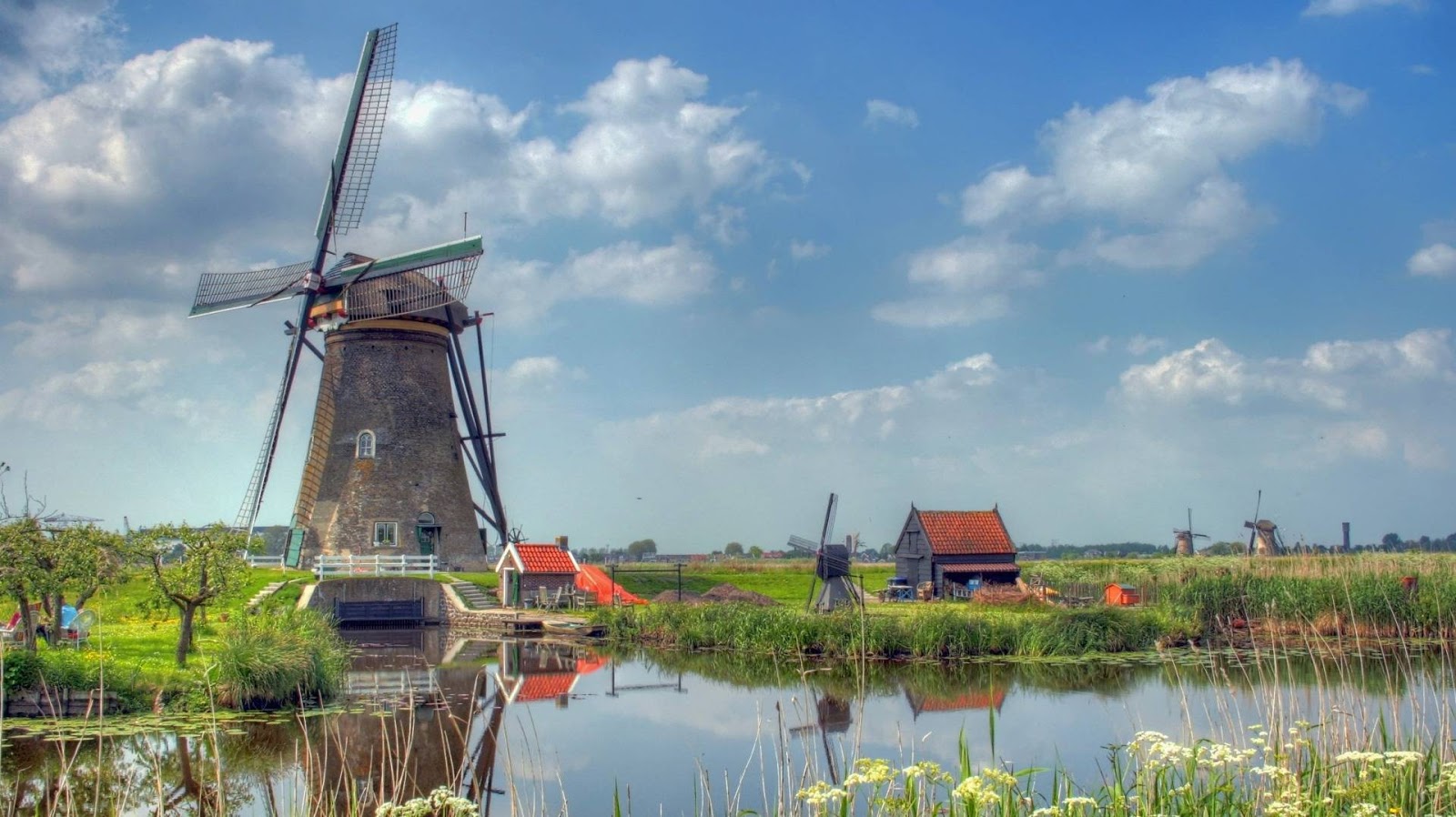
They also may have built huge fish-ponds inland, which would be filled as the waters swelled in the rainy season, flowing over weirs that would trap these inland lakes from draining down in the dry season, providing fish to eat throughout the year. Bruges mentions that idea intrigued him, as he had seen similar systems in old French monasteries. His descriptions of their "bridges, dams, dikes, causeways, canals, ponds, gardens, [and] orchards" reminds me of what I imagine Holland must be like, with its controlled inundation of its low-lying plains, and also maybe of the importance the ancient Egyptians placed on the annual overflow of the Nile.


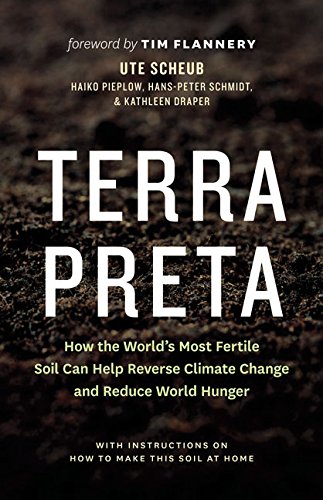
Ute Scheub, in his fascinating book Terra Preta, speculates more closely on the role charcoal may have played in the daily life of the ancient cultures along the Amazon River. (His book credits Haiko Pieplow, Hans-Peter Schmidt, and Kathleen Draper as co-authors: I'm not sure what their contributions were to this book, but each has an interesting body of work to their name, relating to soil science and carbon sequestration. I'm currently very engaged by Kathleen Draper's book Burn, which she wrote with Albert Bates, which details a full spectrum of uses for carbon in the economy, along with applying biochar to the soil.)

Ute Scheub begins by pointing out that indigenous people of the Amazon river did not burn or clear-cut the forest to cultivate an agricultural landscape, instead they established their homes and gardens among the fruit bearing trees. We know that they produced a fair amount of charcoal, which Schaub assumes was probably made from "scrap wood and dead branches," as larger timber was hard work to come using with hand axes, and would probably be used mainly for building homes.

The main use of charcoal would probably be as a fuel source for cooking food. It burns at high temperatures and gives off relatively little smoke compared to burning wood directly. In the hot, humid climate of the tropics, turning wood into charcoal prevents it from rotting before it can be used as a fuel.

Burning charcoal to cook meals leaves one with ash, of course, and not the charcoal content that is found as a major ingredient of terra preta soils. The shards of clay pottery that are also commonly found in terra preta might indicate the other main use of charcoal in a forest civilization.

Based on the animal and fish bones and shells and the human feces found to be a component of these soils, Scheub speculates that both kitchen wastes and bathroom wastes were collected in clay vessels of about five gallons in volume (about the size of the plastic pails in common use today.) Powdered charcoal would have been layered into these vessels, to cover over the wastes, drying them out and preventing odours. The clay vessels would have tight fitting lids, and the contents of the clay containers would then begin to ferment, something similar to Japanese/Korean bokashi fermentation.

The addition of charcoal apparently sets up "better conditions for lactic acid fermentation. Lactobacilli, excreted by the human intestinal tracts, initiate the fermentation process. The numerous water-filled pores of the pieces of charcoal provide an excellent habitat for these probiotic intestinal bacteria. Harmful bacteria, however, have very little chance of survival, as fermentation has a bactericidal effect..." (Scheub, 41)

Scheub continues to conjecture that these clay refuse bins & dry toilets, layered with charcoal throughout, could have been a means of preventing disease within the tightly populated areas along the Amazon river. Containing waste materials, and then subjecting them to a period of fermentation, would have greatly restricted the ability of pathogens to pass from one person to another. The authors speculate that perhaps each person of a household had their own dry toilet, or maybe that a person who was ill was given a personal toilet, to sequester the pathogens that might spread with communal toilets in a densely populated civilization.

In addition to these household-sized pots, there were also larger vessels, 50 - 80 gallons in size (basically the volume of a regular-to-large hot water tank) that would be lined up in rows, maybe in areas that were intended to later be gardens. These larger receptacles were filled with layers of cooking wastes, feces, charcoal and soil, and were sealed at the top to undergo fermentation, and to avoid the contents being washed out or attracting  insects.

Some of these larger pots seem to have been made with holes in their bases, which Scheub theorizes may have allowed effluent to seep out the bottom of the vessel witin the ground, attracting soil microbes up into the vessels, helping transform the mix of fermented wastes, charcoal, and soil layers into terra preta.

Another possibility for some of these vessels is that, "as soon as the vessels began to emit an earthy smell, the indigenous people may have planted a seedling or a banana plant in the vessel to complete the humus-making process" through the symbiotic relationship between plant roots and soil microbes. "In time, plant roots would have burst through the confines of the vessels, providing an explanation for the numerous shards found in deeper soil profiles." (Scheub, 43)

People would slowly fill these with fermented kitchen and toilet wastes, and when this layer of containers was completely filled, perhaps a new set of clay vessels would be built up on top of these, creating the raised-ridge garden mounds, filled with charcoal and humus-rich soils, that seem to have been characteristic of this civilization.

A Potter in Nepal works with clay-biochar mix

(I'm wondering if maybe these mounds were built up first, and then holes dug into them to line with clay, to fire in the ground. How else can a 80 gallon clay pot be fired? Maybe the firing of these pits involved making a batch of charcoal, in open-pit kon-tiki style burn, I'm wondering if the temperatures would be high enough?)

The indigenous civilizations of the Amazon river apparently did not keep livestock (making them very susceptible to the types of viruses brought to their continent by Europeans.) This means that they did not have a steady supply of animal manure to use as fertilizer. The use of their own "humanure" filled the double purpose of making fertile soil as well providing sanitation and disease control. Nor did they use draft animals in their agriculture, they had no plows and no carts. They worked their raised mound gardens with their hands and digging sticks, and therefore spared themselves the degradation of their soils that is normally entailed by constant tilling.

Ebenezer Howard's Schematic for Garden Cities, 1902
James Bruges wonders if this horticultural, forest-dwelling way of life created an egalitarian type of society: there is no evidence here "of pyramids as in the Maya civilization, no ramparts, no hierarchy of grand buildings surrounded by hovels." They certainly engaged in massive building projects, in controlling flood waters with canals, ponds, etc., as well as bridges and roads, and their raised garden mounds, but their projects seemed to focus on function rather than social hierarchy, more civil engineering than the aggrandizing of wealth and power.

"At the heart of each town was a big circular plaza from which roads radiated," one archeologist said of the sites he studied in Brazil, describing them as essentially "garden cities."


* * * * *

"Charcoal is one of the oldest industrial technologies, perhaps the oldest."

                                           - James Bruges

A few years ago, a suggestion in a Transition group meeting of maybe producing an 'Encyclopedia of Post-Carbon Living' got me into the mode of researching one topic related to resilience at a time, instead of the very general reading I was doing before. Not that I would try to become an expert in any topic, but I aimed for learning enough that I could write an encyclopedia style article for that subject.

The first one I worked on was biochar and biochar stoves, then to composting toilets and the use of humanure, then concrete and alternative concretes, then compost heat recovery systems. I picked the topics pretty much at random, but I started to feel like that there was a connected group of materials and purposes that kept circling around in these topics, something like:

biochar  -  clay  -  limestone  -  waste management  -  nutrient cycling  

water filtration and storage  -  fermentation  -  carbon drawdown

Every topic seemed to reach into the other, mind-map style. The histories of charcoal and pottery seemed to be very intertwined, likewise with the ancient kiln-based practice of roasting limestone to make mortar. The oldest temple in the world has lime-clay floors. Biochar works well mixed in with lime mortar/concrete. Biochar is excellent and filtering water, and can help in various composting toilets.  Biochar can be mixed in clay pottery with good results, and clay vessels are ideal for fermenting and food storage. Both clay and certain kinds of cement make excellent cisterns. And of course, working with biochar allows to engage in one form of carbon drawdown.

One example: in Albert Bates and Kathleen Draper's new book Burn, they mention a practice of the traditional peoples of the Levant (around modern day Syria), of finding a good spot for a cistern, beside which they would build a house. The book is a little unclear on the details of the practice, but basically they would dig out the pit, and use some of the clay soils to line the walls of this cistern. The clay would be set with a charcoal-producing, gassifying fire. The biochar was used to help filter the water in the cistern.

On the left, a 2000 year old clay cistern in Syria.

They also used crushed char, ash, calcined clay and potassium lye to make plasters and concretes, one use of which was to make indoor columns that could condense large amounts of water out of the air. On top of that, amazingly, they somehow channeled this condensed water into underground set-ups that basically produced compressed air, and forced it into the bottom of their cistern to keep the deeper waters from becoming anaerobic. They also used the cool, compressed-air they generated for refrigeration, and channeling  through air wells into their orchards, for crops like apples and pistachios that do well by growing in colder air.

It sounds almost fantastical to me, but I bring it up to illustrate how these traditional appropriate technologies can cross-pollinate among themselves, and how traditional peoples often had very sophisticated means of working with nature's systems to provide the necessities of a good human life. It's surprising how often that researching appropriate technology and resilience leads one learning about really ancient ways of living. For instance, my main source for the history of concrete traces the origins of limestone kilns to the shamans of pre-agricultural tribes, and to the construction of temple at Gobekli Tepe around twelve thousand years ago (which interestingly also came up when reading about the memory systems of oral cultures.)

Of all places, biochar happened to get a mention recently on the Joe Rogan Experience podcast, in an interview with the author Graham Hancock. It has to be the largest audience ever to be introduced to biochar, terra preta, and the civilization that once populated the Amazon river basin. The interview was related to Hancock's newest book, America Before, which I believe is centred around recent discoveries that suggest that the indigenous peoples of the Americas have been here far, far longer than was previously thought in the academic world.

Hancock and his collaborator Randall Carlson of Sacred Geometry International have been very active in recent years promoting the idea that human civilization is itself far older than previously thought, having alternated through cycles of flourishing and cataclysm, and that certain remnants these extremely ancient cultures were carried through these collapses and passed on to successor civilizations. I can't help but wonder if somehow this knowledge about these forgotten, obscure civilizations isn't arising now, at this particular moment in time, because there is something there that we need to hear and learn about to deal with the crises we are faced with today.

Anyways, I'd like to follow this introduction to biochar with a few more posts on biochar, including an exploration as to what benefits it might have as a soil amendment, about various biochar producing devices, and on the many uses biochar could have in the economy outside of it's agricultural applications. Please stay tuned.


Biochar Woks, Cooking, Collapse

I came back to my home city about ten years ago, after having lived for a few years up north in the Yukon. I took a culinary arts course ...